
46.22° N, 2.21° E: France
France is the number one destination of the world with 82 million tourists. The French are proud of their wines, perfumes, cheese, fashion world, museums, artists, revolution and revolutionists. Their minds are largely set on two aspirations: Life quality and achieving excellence. Even though it is thought that the immigrant population, due to the free-border policy among EU member states, is changing the French image, the supra-identity continues to prevail. In the 21st century, France has become one of the strongest counties of the world, having integrated its cultural and historic heritage with technology. The presence of 59 nuclear power plants (also a world leader in this area) does not seem to attract the interest of the visitors, who apparently enjoy brioche. It is not difficult to apprehend its current position in Europe and in the world, for those who are aware of the fact that France was one of the key players of colonialism.
From Lascaux to Versailles…
France is the largest country in West Europe. The name used to refer to a large part of West Europe, encompassing mainly today’s France, Gaul also covered Northern Italy, Belgium, Western Switzerland, certain parts of the Netherlands, and of Germany, particularly the west bank of the Rhein.
In the Lascaux cave, famous for the prehistoric wall paintings, located in Dordogne, south France, the artworks date back to 17,000 BC. The first traces of human life in the cave, on the other hand, indicate 28,000 BC. In 1979, UNESCO included to cave into its World Heritage List. Attracting countless visitors from around the world, Lascaux cave is the first know art atelier in the country.
As of 2,000 BC, tribes who are now identified, started to write the history of France. Celts, a Central Europe tribe, invaded the eastern parts. In 50 BC, the Roman Emperor Julius Caeser conquered the Gaul. In 375 AD, with the migration of tribes (or the Barbarian Invasion from the Roman perspective), came the European people we know today. Those, who settled in today’s France, were the Franks. After the collapse of the Western Roman Empire in the aftermath of the great migration period, Europe slides into an era of feudal order, a decentralized system where each newcomer sought settlement.
The first king of the Franks Charlemagne (784-814) also became the successor of the Roman Empire. The pope, whose relations with East Rome had gone south during the iconoclasm period, crowned and consecrated Charlemagne, who was titled not only the King of the Franks, but also the Holy Roman Empire of the German Nation. This empire was holy since it was consecrated by the Pope. It was called Roman Empire, because it was the seen as the successor of the collapsed one, founded by German nation. Afterall, Franks were the largest branch of the German tribes. Therefore, the new empire embraced almost all the tribes.
In the 14th and 15th centuries, the Hundred Years’ War that created great poverty across Continental Europe, affected France, as well. The main figures of early 18th century were Louis XIV, who moved the royal palace to Versailles, followed by Louis XVI, who was executed along with his wife Marie Antoinette during the French Revolution. 1789 brought a new leader, Napoleon Bonaparte, who was among the anti-monarchists.
How good God’s French is…
As of early 17th century until 1960s, France stood as a colonial country. In both world wars, France allied with the UK. Following the retreat of Germany at the end of WWII, France was led by Charles de Gaulle, who clearly put his mark on some 25-year-long history of the country. The student revolt in 1968 shook the government. Following his resignation in 1969, de Gaulle died in 1970. Even though, the concept has become bit outdated, de Gaulle’s nationalist attitude continues to be remembered with wittiness. When de Gaulle died, Noel Coward was asked what he thought God and de Gaulle would talk about. Coward replied “Well, that depends on how good God’s French is”.
During the last three decades of the 20th century, France was led by François Mitterrand and Jacques Chirac, respectively. Both socialist Mitterrand and right-wing politician Chirac served two successive terms. During this time, France was held responsible for the massacres in Rwanda, Algeria, Sudan and Chad. The nuclear test held in the Pacific and Algeria also drew attention. After the completion of his office term, Chirac was succeeded by Nicolas Sarkozy, the internal affairs minister of his party. N. Sarkozy was under the spotlight for France’s active role in the civil war in Libya and its efforts towards passing the law for the recognition of the Armenian genocide. In 2012 elections, he had to leave his seat to the socialist party candidate François Hollande. Even though he had a good start, Holland did not run for a second term due to the missed economic targets, increased unemployment rates and terror attacks against the country. We do not know whether Emmanuel Macron, founder of the Central Party, will be able to keep the 67 million population away from the deep-seated left-right conflict, but “Being French” or “Staying French” are still popular concepts, denoting French nationalism.
The country is surrounded by the English Channel, the Mediterranean and the Atlantic Ocean. Thanks to its rivers, the land is fertile, enabling the country be self-sufficient in terms of agricultural products. The literacy rate is as high as 99% and 88% of the population is Catholic.
France refrained from cutting its wide welfare and gigantic state bureaucracy and preferred to increase tax rates and cut defense expenditures to compensate the budget deficit. Along with 10 other EU member states, France participated in the Euro system referendum held on 1 Jan 1999. It is among the five permanent members of the UN Security Council. The Channel Tunnel beneath the English Channel connects France to the UK. France is a country with several overseas regions and territories.

Ville Lumiére (City of Lights) …
Paris is considered as a city-state on its own. The vivid and sparkling capital is the trendsetter for the fashion industry of the country and the world. The Seine is a main attraction of all city tours. Tourists can take a look at the city from the river, taking the long and oblate boats specially designed to pass under the numerous historical bridged across the Seine. The Pont Neuf is the oldest standing bridge of Paris. The Pont Royal was built in 1685 for Louis XIV. Pont de la Concorde, a.k.a. Pont de la Revolution, was built with the stones of the Bastille prison, demolished during the French Revolution (1787-90). With the Pegasus statues, Pont Alexandre is the most romantic bridge of the city.
The Seine River divides the city into two parts: The Left Bank and the Right Bank. The Right Bank (Rive Droite) has always been the trade centre and the royal house. Even today the businesses and government offices are on the Right Bank. With its bohemian and avantgarde atmosphere, the Left Bank is the part where universities and monasteries were located in the past. Today, Sorbonne University, Academie Française and tens of thousands of publishing houses and bookstores energize the intellectual life on this side of the capital.
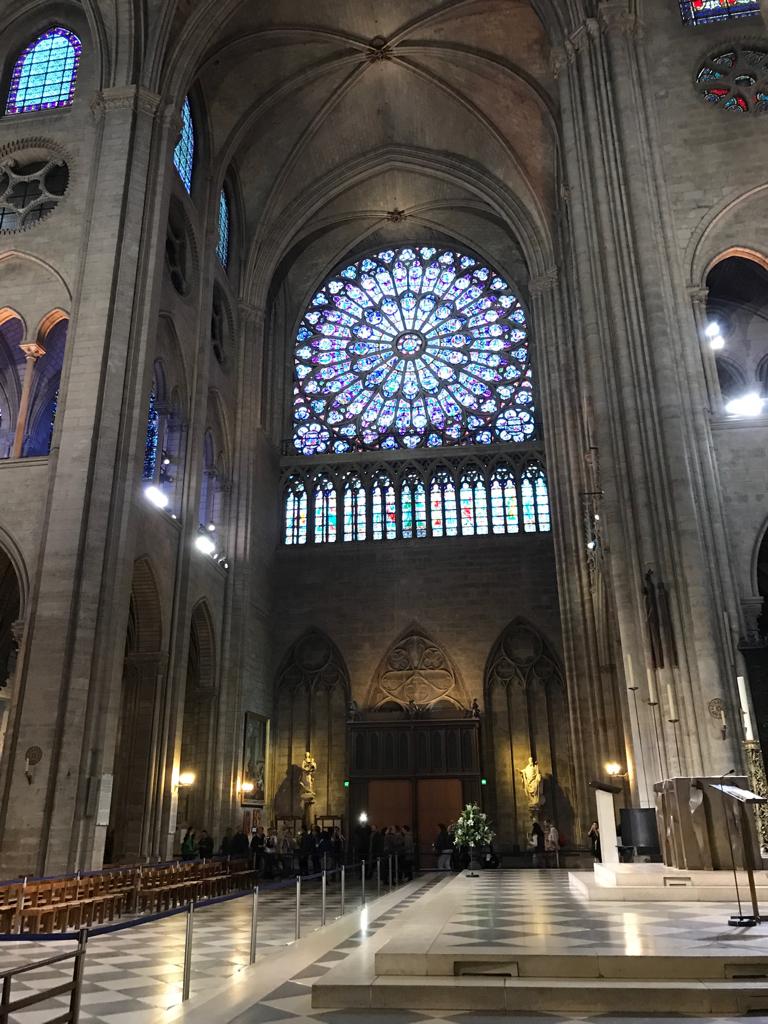
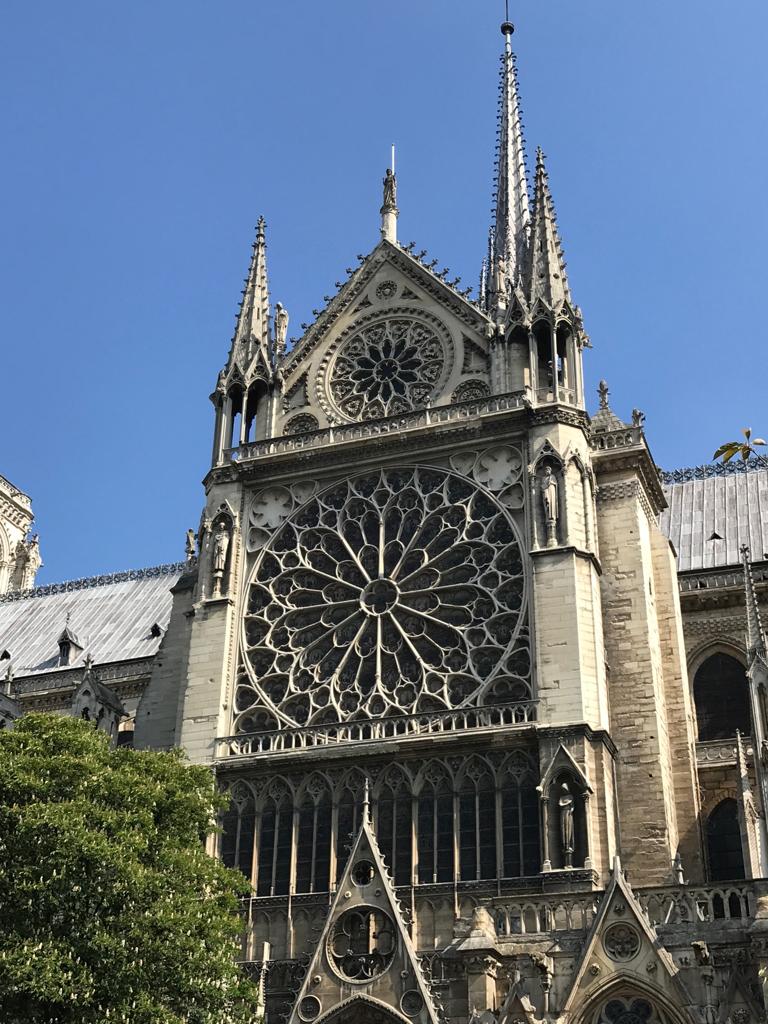
With 12 million inhabitants, Paris is among the most populated capitals of the world. Those who reside in Paris are called Parisien, who are most commonly famous for their unlimited self-confidence. Saint Geneviéve is the patron saint of the city since she is believed to have stopped Attila the Hun from burning the city down in the 5th century. In the 3rd century, the it was the Celtic Parisii tribe who settled in the area. They first settled on Ile de la Cite, the largest island on the Seine. Today, the island lays at the very heart of the city, hosting many public buildings along with the Sainte Chapelle and the Notre Dame Cathedral, a gothic masterpiece, both of which serve as the major destinations of religious tourism. Distances in the city are calculated with reference to the Notre Dame.
One of the most glorious monuments of the Right Bank is the Arc de Triomphe (Triumphal Arch), symbolizing the victory of the revolution and Napoleon, who was not present at the opening ceremony of the national landmark held in 1836. The city is rich with boulevards with magnificent buildings: Boulevard Richard Lenoir, Avenue Foch, and of course, Champs-Èlysées, which is known for luxurious jewellery, haute couture stores, airline offices, movie theatres and auto showrooms.
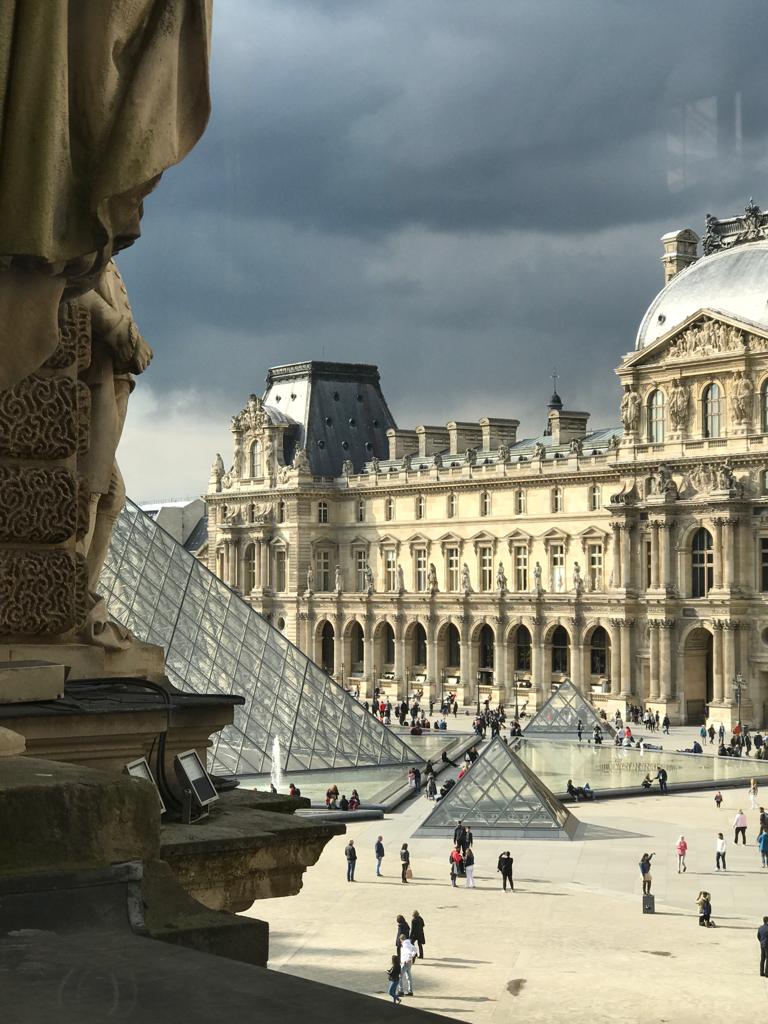
The Luxor Obelisk, made of pink granite, is the oldest monument in the city. Dating back to 1300 BC, the obelisk was sent as a present by Mehmet Ali Pasha and was placed in 1836. Another landmark, The Louvre Museum (Musée National du Louvre), is also on the Right Bank. As the first public museum of the city, it was opened in 1793, soon after the Revolution. In addition to the exhibition halls, the museum is in fact a large complex including a rich library, conference hall, labs for restoring and studying artworks and Ècole du Louvre, focusing on the study of art history museology. Visited by 8 million people a year, Louvre is also famous for exhibiting Leonardo da Vinci’s Mona Lisa. It is known that a similar version of the painting is kept in the museum archive.
Marais, is a district found in the 17th century, housing mansions of rich Parisians. Today, all those houses have become museums or libraries, turning the neighbourhood in to the symbol of bohemian life. Bastille district, laying on the east, has been identified with the working class and social uprisings. Today, on the Labour Day trade unions still start marching at Bastille. Père Lachaise is the grand cemetery of the city. Founded in 1804, the cemetery is always taken care of meticulously. Being the resting place of more than 1.5 million, the cemetery includes the tombs of Chopin, La Fontaine, Moliere and Oscar Wilde.
The Left Bank means fashion and media, schools and colleges. Students enjoy following classes and discuss in the open air and prefer to keep this tradition alive. Place Saint-Michel is a square where students come together and buy books. The center of the square houses the main building of Sorbonne, which was built in 1253, ordered by Robert de Sorbonne, preacher of King Louis IX, to serve the poor theology students at the time. The school was later converted into a university.
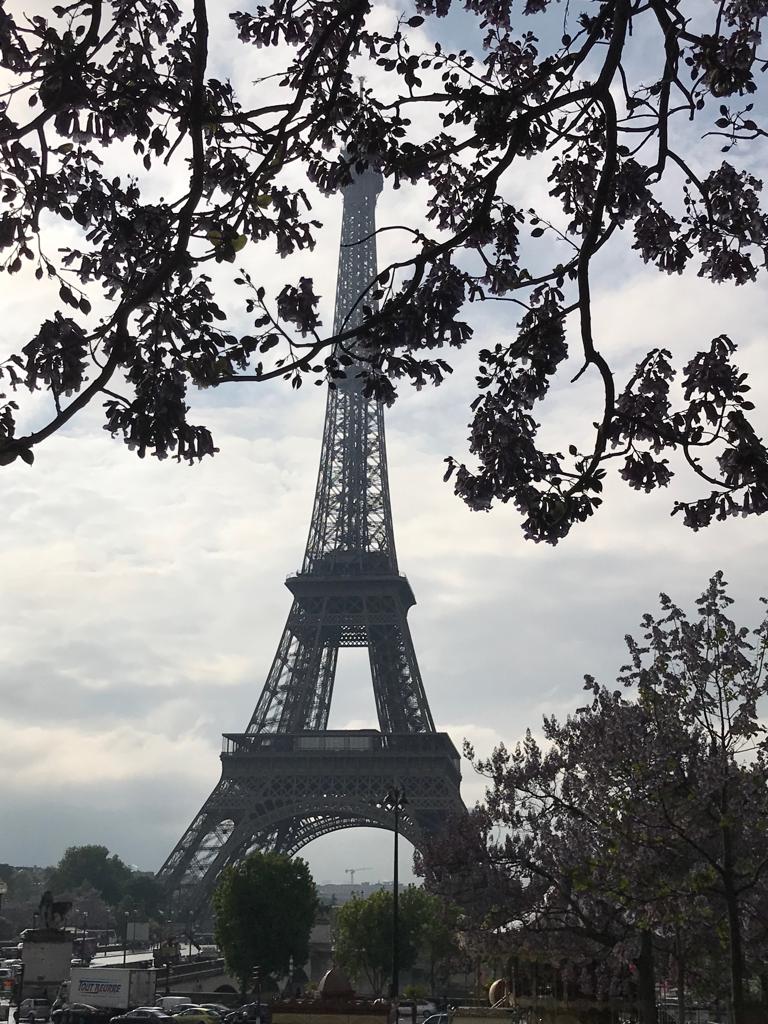
Among other significant attractions of the Right Bank are: Jardin du Luxembourg, frequented by Parisians, Place Saint-Germain-des-Pres, housing publishing houses and literature cafés, Hotel des Invalides, the first national military hospital built during Louis XIV reign, and of course, the Eiffel Tower, the landmark of the city, built by architect Gustave Eiffel to celebrate the centennial of the Revolution.
Do not let Paris blind you…
Certainly, Paris is the most popular destination in France, but there are many other spots offering different cultural, historical and natural beauties to visitors.
Laying 21 km away from Paris, Versailles, a legacy of Louis XIV, is magnificent, impressive, glorious and arrogant. Mirroring the characteristics of the King, the royal palace was originally built as a hunting lodge and retirement office for his father Louis XIII. Among the noteworthy sections of the palace are: the royal chapel, Galerie des Glaces (Hall of Mirrors), Grands Appartements, where the court members were hosted, and the grand channel in the garden. The Apollo, Neptune and Dragon fountains in the garden start working with baroque music playing on the background, which creates an atmosphere reminding the glamorous parties given by the Sun King, at the courtyard. Lying approximately on 11 acres, the palace has 700 rooms, 50 fountains and a water channel with 35 km length. A magnificence worth seeing…
Another beautiful corner of France is Amiens, capital of Picardie. Here we find the largest cathedral of the country: Cathedral Notre-Dame de Reims, famous for its 110-m-long choir aisle and some 400 depictions on the walls. Built in gothic style in the 13th century, the Reims Cathedral, where the French kings are coronated, is among Europe’s largest cathedrals dating back to the Middle Age. Located 120 km. north of Paris, Amiens lays near River Somme. The small channels passing through the city create great views.
Strasbourg is the centre of intellectual, cultural and economic life. The Cathedral, built in the 13th century, is the landmark of the old town. The gothic style cathedral is known for its asymmetrical structure. In 1988, Strasbourg has been included in UNESCO World Heritage List. Hosting EU meetings since 1949, the city also houses the European Council, European Parliament and the European Court for Human Rights. Particularly reflecting the characteristics of French and German cultures, the city is famous for its vineyards.
Burgundy (Bourgogne) is a region on the northeast of the country. The most popular attraction is the Vézelay Abbey. The relics of Mary Magdalene can be found in the Basilique Sainte-Magdalene, also listed as a World Heritage by UNESCO.
Having stood as the largest church of the Christian world until the completion of the construction of San Pietro in Rome, in the 17th century, the Cluny Abbey (909) in Macon raised priests through the Middle Age. The Abbey has been at the centre of political and doctrinal debates and discussions of the time. The Benedictine monastery is also the starting point of the First Crusade and the pilgrimage route to Santiago de Compostela. The abbots are the emperors. The Abbey also manages circa 1450 monasteries housing more than 10,000 monks across France, Germany, Spain and the UK. Apart from its value as a religious attraction, Burgundy is associated with the fertile valley, full of streams, endless vineyards, vine production. The region is also known for its typical vine bottles and balloon tours.
Normandy is the French region on the Atlantic coast. Here, the majority of the land is cultivated. With its meadows and orchards, the region is famous for its cider and strong cheese production. It is also known for the Normandy landings, where the Allied forces came to France’s rescue against German invasion during WWII. Among the landmarks of the region, is the Mont-Saint-Michel Abbey, aka Merveille de l’Occident (Wonder of the West) is a cloister built on an island. Built by Benedictine monks in 1017, the Abbey was fortified in the 14th century, when a village settlement was formed next to it. The first road to the island was built in 1874. The Abbey’s architectural value is undebatable.
Lyon was Gaul’s capital during the Roman era. Silk trade played an important role in the development of the city in the 16th century. As second largest city, today Lyon is the textile and industry centre of the country. Laying in southeast, between Marseille and Paris, Lyon is also in the World Heritage List of UNESCO.
Avignon, on the south, is known as the “City of Popes”. Today, it is a cultural attraction for its festivals. On the Mediterranean coast we find colourful cities: The oldest French city, founded by earliest Greek colonist, Marseille; St-Tropez, attracting fashion photographers, models, and jet set; Cannes, famous for its A class film festival; and Nice, home of Mardi Gras.
French cuisine…
In France, a market is held in every town. Opening early in the morning and serving till noon, the market vendors offer local products like honey, wine, cheese or textile. Gastronomy is a crucial part of French life style. Despite a slight tendency toward fast-food, in general French people take cooking quite seriously. While the gourmet restaurants are pricy, the bistros are affordable. Even though different regions have different styles, typically, the French have raw vegetables and cold meat as starters. Steaks marinated in wine are followed by cheese platters. France produces more than 400 cheese varieties.
The French cuisine ‘s development has been in line with the power France gained over the world during the Colonisation following the Revolution. Chefs like Marie-Antoine Carême (1784-1833), who gained popularity during Napoleon Bonaparte’s era, practiced the elaborate style of cooking known as grande cuisine (or haute cuisine) and enriched the country’s cooking culture, substantially. The French cuisine covers a wide range of dishes, including read meat, seafood, dairy etc.
In addition to exporting its world-famous wines French is also among the top cheese producers of the world with more than 1000 registered varieties. Regions known for vineyards and wine production are: Bordeaux, Burgundy, Champagne, Corse, Jura, Provence and Savoy. Among the most famous French cheese, we find Brie, Camembert and Roquefort. The typical French cuisine products that come to mind are croissant, escargots, baguette, paté and crème brûlée.
Fashion and Women…
Unpretentious women, always elegant and chic. It is not easy to be an independent, stylish and sophisticated Parisian lady, inspiring designers worldwide and living as trendsetter of the fashion world. A Parisian starts her day with chocolate croissant and a cup of coffee. She eats out often. She never refrains from having cheese, meat and wine, but only in small portions. She is fit because she leads and active and energetic life. A Parisian woman is always busy and has a tight schedule. She always goes out with friends to dine or a for a quick lunch. She visits museums, goes to concerts, cafés, reads and of course shops.
Always, she prefers to walk or ride her bike when the weather is fine. Even if she is not very beautiful, a Parisian woman knows how to turn eyes, which is owed to her strong self-confidence. She also prefers a light make-up, keeping her natural aura. In her daily life she does not use anything more than a simple shine, mascara and nude eyeshadow. Not even an eyeliner. In parties, Chanel’s red lipstick is her must. As a whole, being a Parisian is an art, a mindset. The French woman is fashionista, yet in some way shapes the fashion as well.
For instance, by wearing the French panty-hose stockings that became popular through 1960s the women around the world did not turn into Parisian ladies…
Au revoir!
 Blog
Blog 