The Catholic Spanish in the timbres of guitars, in the arenas, siestas and fiestas and the Muslim Arabs in drum beats, palaces and mosques. Left hanging in mid-air: Andalucía.
THE END OF THE WORLD or GIBRALTAR…
Spain lays on the eastern corner of Europe and Andalucía, of Spain. 3000 years ago, Phoenicians built a colony in Cadiz, where they thought was the end of the world. According to their belief, it was God Melqart who placed the rocks on the Strait, as pillars, in order to stop people from going forward. The region was ruled by the Romans in the first century, followed by the Visigoths and Vandals, who came with the Migration of Tribes in the 4th century. Christianization, which was started by the Roman, accelerated under the Visigoths. However, the land did not remain Christian. The Iberian Peninsula became a stage for a great struggle that lasted until 1492. Bringing their belief and culture along, the Muslim Arabs rendered the character of Spain.
RECONQUİSTA…
A reckless African Berber, Tariq ibn Ziyad, the conqueror of Spain, the last ring of the Islamic conquest chain. He would not have guessed that the strait would later be named after his name when he crossed it commanding the Arab army. It is believed that he had his fleet burnt down when he set foot on the land so that no man could think of turning back. He addresses the soldiers and challenges them: “The sea like an enemy is behind and the enemy like the sea is before you…”
Following their arrival in 714, Umayyad Caliphate’s presence in Spain lasted for 8 centuries, which can be examined in different eras in terms of political history and ended in 1492. Their cultural influence, on the other hand, lived longer. The reign of the Caliphate of Cordoba is defined as the golden age of science, art, politics and Islamic tolerance. The reasons for its collapse are similar to those of all collapses through history: A locked system, narrowing horizons and the last but not the least: the Reconquista (Reconquest).
When the Aragon and Castilla kingdoms in the north united forces in 1469, the Caliphate was doomed to fall down. In 1492, the Christian Reconquista was achieved. While all Arabs and Jews were exiled, which also generated funds for Columbus’s exploration. The only people allowed to stay were the Moriscos, Muslims who converted to Christianity. Similar to the past examples in history, reconquest ended with a great massacre. Beyazıd II, the Ottoman Sultan of the time, assisted the Muslims migrating back to African coasts. In addition, without imposing religious discrimination, he agreed to welcome anyone, who wishes to live under his rule in his lands. The immigrants were given Ottoman identities.
Today, comprised of 8 provinces, Andalusia is an autonomous region on the south of Spain, known for bull fights and Flamenco. For many, characteristically the region reflects the true Spanish spirit. The amalgamation of the two cultures is most easily observed in Sevilla, Cordoba and Granada. The coastline of Malaga, the biggest city near the sea, is the main attraction of European jet set.
MUDÉJAR ARCHITECTURE…
Despite being limited, architecture is the main representative of Islamic art in Andalusia. Similarly, the limited number of aesthetical and refined examples of wood-carving and ceramics reflect the strength of the culture behind them. Due to the internal conflicts among Muslim rulers and the destruction by the Spanish forced, a very limited number of artworks survived to date. Here, Islamic art obviously has common characteristics with the Islam world in general, but the Caliphate also created its own unique synthesis. This new style is mainly owed to Islam’s tolerant nature. Despite many divergences in other aspects of life, visitors of Andalusia can observe the cultural harmony in artworks.
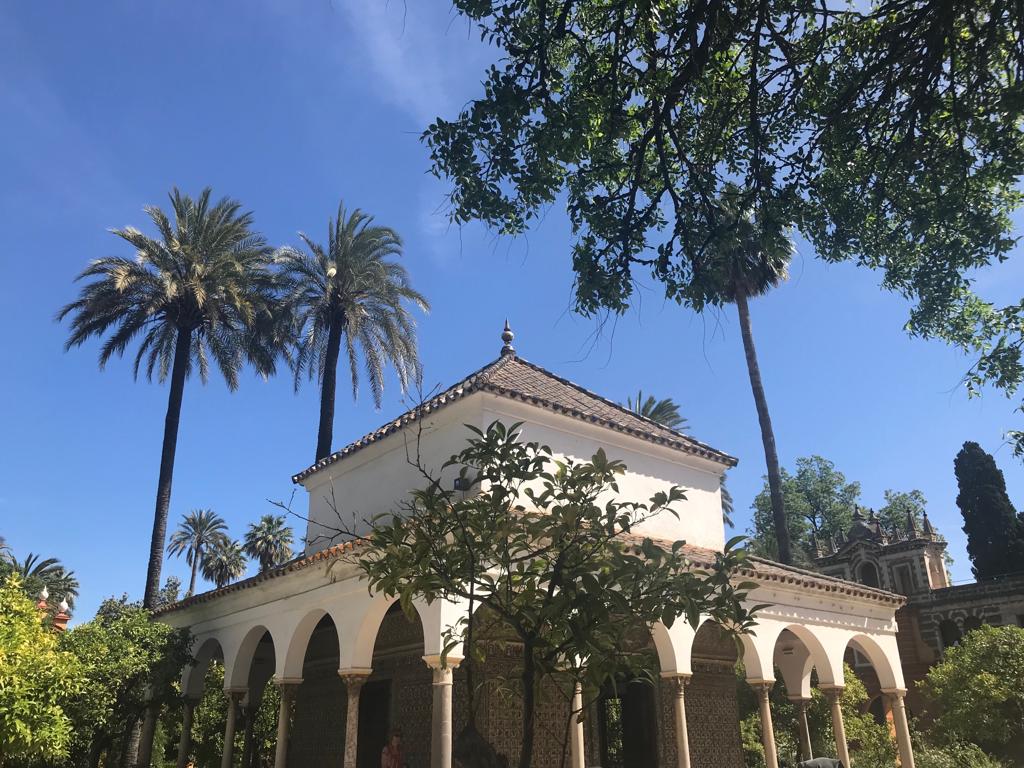
With rich greenery Seville, by far the most aesthetical city of the country, was the capital of the Caliphate. The magnificent belfry of the San Maria Cathedral was originally the minaret of the Umayyad Mosque built there in 1184. The gothic cathedral was built on the same spot where the grand mosque, demolished in the 15th century, once stood. The Alcázar Palace, neighbouring the cathedral, also reflects traces of gothic style. Started in the 12th century, its construction was completed under Christian rule. The decagon shaped Golden Tower (Torro del Oro), made of brick, forms one of the outer walls of the palace. Flowing near the palace, Gualdalquivir River, illuminates the city.
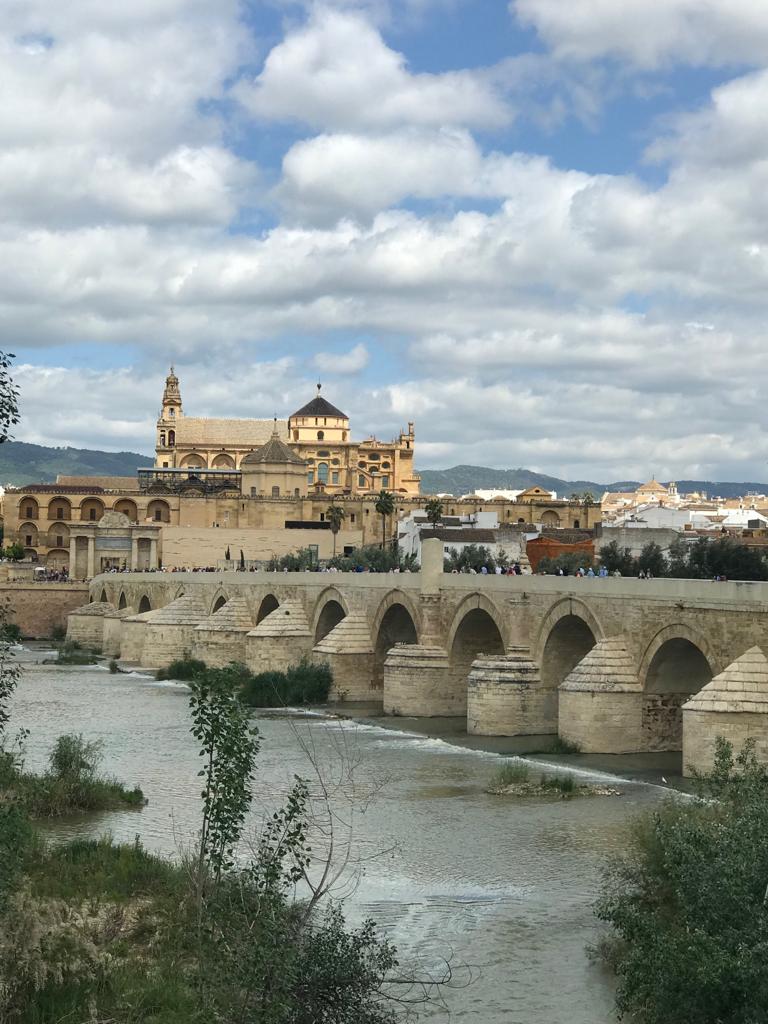
The most significant monument of Andalusian art in Spain is the Great Mosque of Cordoba (or the Grand Mosque), which has a special place for the Islamic world. After the Reconquest the Mosque was converted into the City Cathedral by the addition of a chapel in its centre. Included in the World Heritage List, the Mosque is notable for its countless columns with double arches and stretches to a 2-acre area. There is a strong contrast between the elaborate human figure depictions in the central chapel and the Islamic ornamentations on the mosque walls.
Even though it is not as magnificent as the Grand Mosque, the Bab al-Merdum Mosque (El Cristo de la Luz) in Toledo has served as the central mosque of the city from the 10th century until the Reconquest. It is the only monument that survived from the Caliphate era.
The Medina Azahara (Medinat az-Zahra), located 5 km west of Cordoba, is the first and partially preserved example of palace-city architecture. Currently, certain sections of the palace, where the state decisions were taken, is under restoration. Cordoba is known for being the first European city to have street lamps.
Granada’s Alhambra (Al-Hamra) is a palace complex example that attracts the attention of the entire world. Again, included in the World Heritage List, Alhambra, meaning “The Red One”, is named after the reddish-brown bricks used to build its outer walls. There is no other building on earth, where the word Allah is used so many times to decorate its arches, domes, columns and walls.
Moreover, Granada hosts one of the oldest and largest arenas of the world. Plaza de Toros is a perfect example of neo-classical style.
Mudéjar art refers to a style, where elements of Islamic art were embedded into Christian art, especially seen on artworks produced by Muslim and Christian artists, collaboratively. An amalgamation of Arab motifs and gothic art, the style is generally regarded as the sequel of Islamic art in Andalusia.
To see some examples of Mudéjar art, one can visit Las Huealgas Monastery in Burgos and La Seo (Catedral del Salvador) in Zaragoza. The traces of the art style can be seen in many old mosques, now converted into churches/cathedrals.
ONCE UPON A TIME, WHEN SPAIN WAS MUSLIM …
In the beginning Andalusia was a safe haven or a security blanket for the politicians and scientists fleeing from the oppression by the Abbasid and Fatimid regimes. A sophisticated and civilized environment grew later formed a favourable atmosphere for scholars. The region has been a homeland, where the greatest minds and respected philosophers of the Islamic world were raised. Islamic civilization, which had already lost its front-runner role in the East, was revived and started to create influence on the Renaissance.
Among them were Avempace (ibn Bajje), who evaluated human as a microcosmos, ibn Tufail, author of the first philosophical novel Hayy ibn Yaqzãn, Averroes (ibn Rushd), the greatest advocate of Aristotelianism of the Middle Age, and ibn Arabi, who had a great influence on the coming generations of philosophers. Even though these scholars had different interpretations and sometimes even conflicting views, great minds think alike. All of them tried to teach ways of maintaining a balance between the material world and spirituality. Their illuminating attitude becomes most obvious in this quote by ibn Tufail’s that has been a pillar for Sufism: “The world and the hereafter are like co-wives. The happier you make one of them, the angrier the other one will be.”
The first comer Muslims were afraid to be assimilated by the Christian majority. Therefore, they built numerous mosques and Quranic schools. Holding on to their own culture, they achieved to stay firmly attached to their belief. Eventually, Islam became the prevailing religion, let alone being assimilated. In the 50th and 250th years following the formation of the Caliphate, the number of mosques in Cordoba were 491, and almost 4000, respectively.
The Caliphate in Andalusia reigned concurrently with the late Seljuki era and the rise of Ottoman state. Towards the end of the Middle Age, European people was stuck between Islamic states both on the east and west.
MOST CATHOLIC CATHOLICS…
Today, entire Spain, including Andalusia on the south, is a Catholic kingdom led by Felipe VI. Despite certain regional nationalist movements, and differences in local traditions, we can talk about a “Spanish lifestyle” in general. A typical Spaniard is joyful, talkative, polite and undaunted and loves good food and fine wine and is attached to his/her family.
Of the 47 million Spaniards, 94% of the population is Catholic, member of the Roman church. However, the Church’s impact on the state has come to an end, long time ago. Even though, the traditional relationship between the Church and the State is maintained, the laws include many articles the clearly disapproved by the Church, such as the law securing the LGBT rights. Moreover, the obvious reflections of beliefs on the daily lives fade away, gradually. As the Church has a difficult time in recruiting candidates to raise as priests, Spain imports clergymen from Latin American countries.
The again, as devoted Catholics, 20% of the population claim their beliefs and rituals. There are certain rituals practiced even by families who do not attend church services on a regular basis. For instance, many Spanish families spend more than 2000 euros for the holy communion of their children. The country is very rich with historical churches and cathedrals. Spaniards are sensitive about their outfits when entering a church and they expect the visitors behave similarly. The holiest of all is the Santiago de Compostela, capital of Galicia region on the north. One of the three holy cities of Christians, the city, which is believed to have the burial place of Apostle St. James, has been a pilgrimage destination since 9th century.
What about the Muslim community in the country? In 1992, the Spanish government, officially recognized the Spanish Islam Commission and bestowed certain rights to Muslims. There are mosques and masjids in many towns and cities. There is an Islamic University named ibn Rushd and an Islamic Culture Centre in Madrid. Official stats indicate that in the country there are 600,000 Muslims, openly expressing their religious identity. The state has made many arrangements to facilitate their lives and the Muslims do not have significant problems in practicing their religion.
LET THE CASTANETS CLICK AND SKIRTS SWAY…
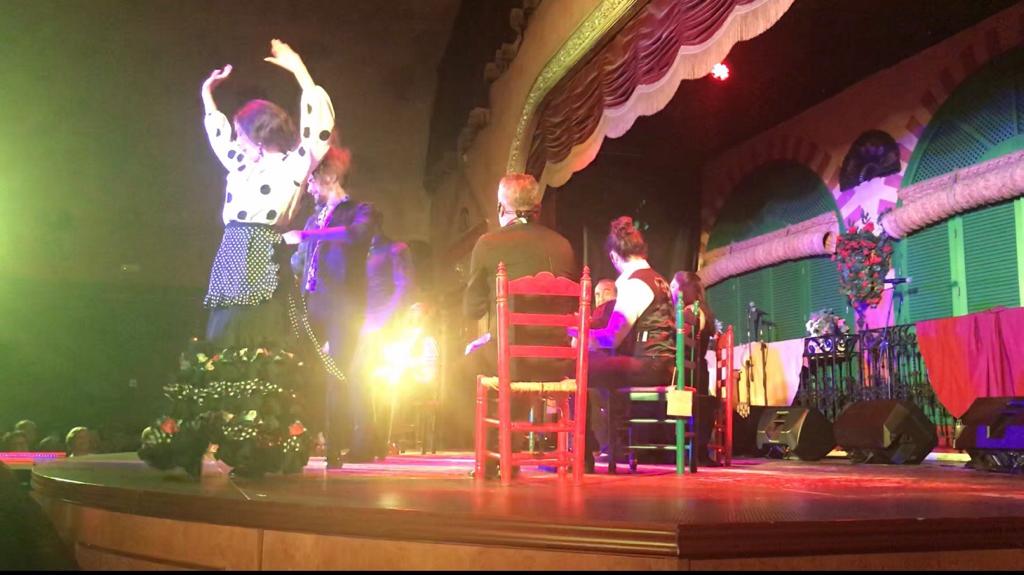
Flamenco is the traditional dance and music form of Andalusia. The Spanish lady’s pose with her circular earrings, low bun, ruffled skirt and traditional dance shoes is a typical image in everyone’s mind. Today, Spanish woman’s style is no different than European women in general. The traditional tone is lost. In general, women take care of themselves yet without overemphasis. It is known that following the Russians, Spanish women is the second group with highest expenditure on cosmetics products. Traditions living in dances reflect Spanish women as dominant characters. In the past, the dominance was limited to the household life. Today, Spanish women are fighting for their rights in every aspect of life.
According to the Andalusia Women Institute in Sevilla, out of 10 working people in the region 6 are men and 4 are women. The rates of men vs women attending a university are 48% and 52%, respectively. However, only 60% of the women attending university graduate and get a degree. Spain imposes compulsory schooling until 16.
Thanks to membership candidacy process, it was easy to overcome the resistance against the steps taken forward gender equality, in order to meet the expectations of the EU. During its candidacy and finally membership to the EU, Spain was offered financial aids by the European Social Fund, which also played a key role in the execution of many regional and central projects.
Spanish people, a bit of Salvador Dali, of Pablo Picasso, Cervantes, a bit of the guitar, and drums, the Gypsy Kings, Penelope Cruz, a bit Muslim, a bit Catholic, a bit Mediterranean, a bit European…
Spain, a mixed sauce in the Mediterranean basin.
Adios…
 Blog
Blog 