
India, the spicy, aromatic land of smiling people, who are happy against all odds; a mixture of colours and ashes, homeland of the festivals uniting different belief systems under the same roof; a country where poverty is accepted with dignity.
It is a diamond-shaped peninsula stretching from South Asia to the Indian Ocean. More than 1 million inhabitants live on a land of 3.287.000 km², home for more than 800 languages and dialects, 16 of which form the official languages. One third of the population live on the streets. There are remarkable differences between the east and west, north and south regions of this great country, in terms of climate, geographical characteristics and racial backgrounds. It is not easy to visit all parts in just one tour. Like in every country, India also has certain must-see destinations, like the Taj Mahal. Except for the classical temples and Islamic architecture, there is no other country on earth that offers such diversity and richness with regard to beliefs and colours. Visiting the country is a real feast; the observations take you to an inner journey, where you contemplate thoroughly…
India gave birth to 3 countries…
Dating back to 5,000 years ago, synchronic with Egypt and Mesopotamian civilizations, earliest cultures in India were enlivened by Indus River. The Aryan people migrating from the north brought along their belief system, the Vedic, religion, which forms the basis of today’s Hinduism and caste system. In the 4th century, Alexander the Great ended his conquest movement in India. Campaigns by the armies of Mahmud of Ghazni laid the foundations of Islam in the peninsula in the 11th century. In 1499, when Vasco da Gama set foot on India, the land turned into a golden apple that wets the appetite of entire Europe right at the beginning of the colonialist movement. After resisting for about 3 centuries, the Mughal Empire, a Turco-Indian Islamic state, was finally taken down by the British. The independence movement, led by and identified with Gandhi, came to an end, when the country was officially recognized in 1947. Soon, as a result of the Muslim-Hindu conflict that led to mass immigrations and massacres, Pakistan proclaimed independence. The eastern part of Pakistan later turned into another country: Bangladesh. In short, from the Indian peninsula emerged three countries: India, Pakistan and Bangladesh.
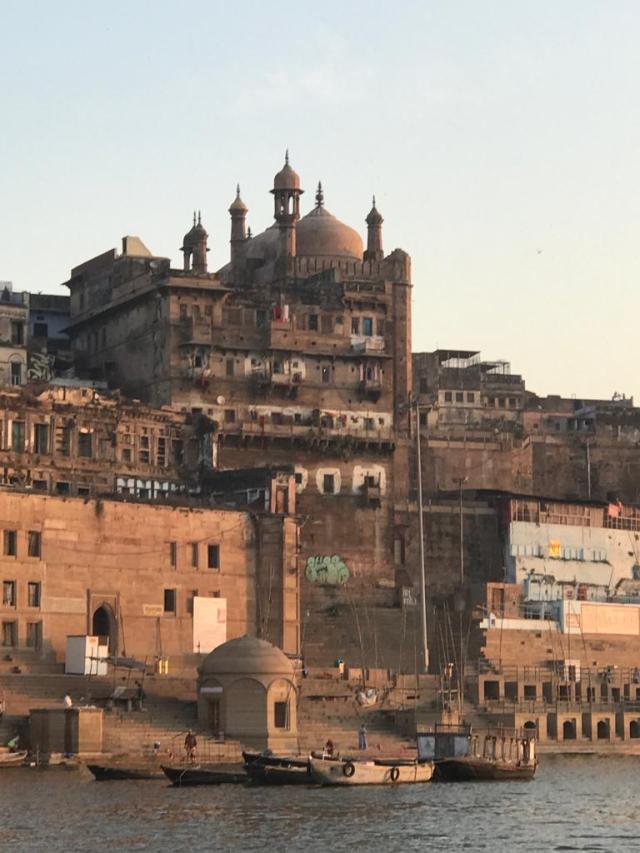
“Indra Gandhi”
We find two women in the recent history of the country. Leaving her mark on the 80s, Indira Gandhi was the first female leader the country had ever seen. She was the daughter of Prime Minister Nehru, the mastermind of the disintegration. Since her term is mainly associated with corruption, in Turkish, as a colloquial expression, “Indira Gandhi” is a synonym for embezzlement. When she sent troops to the holy temples of the Sikhs in Amritsar, Gandhi paid the price by being assassinated. When her heir and son, Rajiv Gandhi, who also studied in the UK, was also assassinated, as a sequel to the revenge, Indira’s daughter-in-law, Sonya Gandhi, became the second female leader of her party. Love between Rajiv and his wife of Italian origin, which started in England, paved the way for Sonya’s leadership. Today, as the Chairperson of Indian National Congress, she is seen among the most powerful women of the world. Divided into 28 regions, the varicoloured country is now led by Ram Nath Kovind, former governor of Bihar state. A democratic republic, the country is a federation of states. Even though the country has a secular constitution, every single item and person in the country, including its rivers, cows, beggars and even the president, is brim with belief, from head to foot.
“Inner journey” is okay, when in India…
In Greek, the word mystic refers to the person attending the ritual. But today, it defines a new level of perception through an inner journey. Through this experience, the person reaches nirvana in Buddhism and moshka in Hinduism. In other words, an exceptional wisdom transforms the person mystically.
What is mystical in Hinduism is the fact that this religion has something to offer to every person, varying from craziness and joy in festivals to contemplation and abstemiousness at the ashram. Including 80% of the Indian population, Hinduism has many believers across the Far East. The biggest polytheist religion of Asia stands as world’s third largest religion following Christianity and Islam. Reincarnation, cremation of the dead and the caste system make up Hinduism’s basic differences from the principles of celestial religions.
Members of the secular world pursues these mystic religions. If you fail to overcome the obstacles and devote yourself to a mystical religion, it will sure find its way to you. In the tale of “It’s a Small World After All”, an Indian neighbour will appear on your street with his/her yoga, chakras and guru.
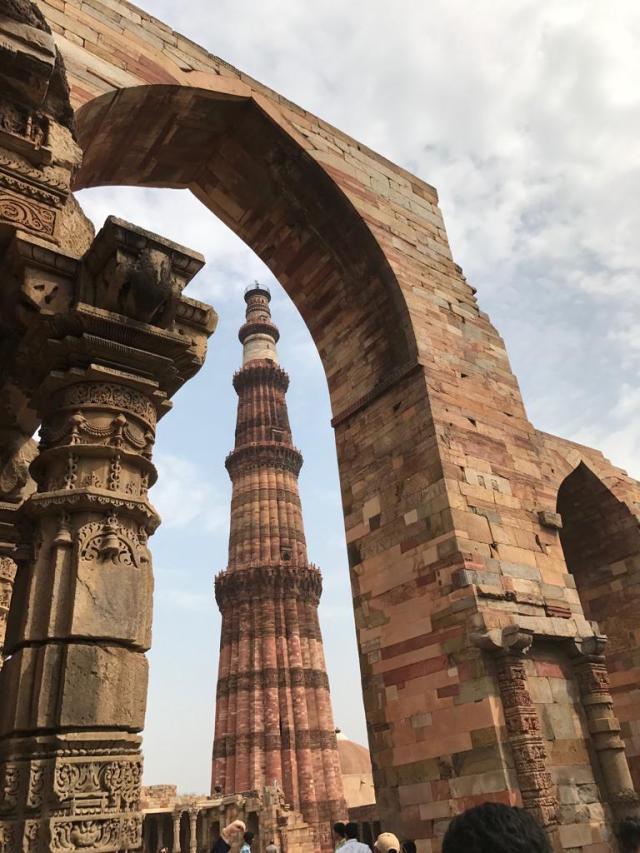
“Lives turn into ashes” …
Soap bubbles, detergent boxes, plastic bottles, bones, ashes, cows, leftovers, laundry, fire, smoke, sewage, non-cremated cholera victims and baby bodies… Despite all, it is not easy to convince an Indian that River Ganga is not clean. At early dawn, lips start reciting “Ganga Mai ki jai!” (Thanks to Mother Ganga). This is a common thanksgiving prayer by all men and women on the ghats (stone steps). The holiest ghats, where the dead are cremated, are in Varanasi. The elderly residing in farther districts travel to the site to die. The cremation ritual lasts 3 hours. The officers sweep the ashes into a bucket and scatter into Ganga. Each year, more than 250.000 Hindu pilgrims gather on these steps, where women dry their colourful saris.
Laid on a cedar bed, and a bier made of bamboo poles, bodies, wrapped in a white cloth are cremated after a couple of drops from the Holy Ganga are poured on the lips are cremated, turning into half a bucket of ashes…
“Any day is a Holiday for an Indian”
From the rural festivals dedicated to local gods to all celebrations, be it birth, death or wedding, are very colourful and involve dancing. Inclined to have fun, an Indian can always find a reason to celebrate. Despite the differences in their worshipping practices, heroes and pilgrimage destinations, different beliefs unite at these ceremonies. Even though only 12% of the country is Muslim, India has the third largest Muslim population of the world, following Indonesia and Pakistan. Regardless of Islam’s rigid attitude towards the caste system and reincarnation, the two religions have been living together in peace for hundreds of years. Jainism, Buddhism, Sikhism, Jewism and Christianity join this wide spectrum of religions, enriching the colourfulness. The Zoroastrians, who instead of burying or cremating, leave the dead to Towers of Silence, practice a whole different belief system on this land.
In the midst of this philharmonic of beliefs, Hinduism took action against the imported religions or newly emerging belief systems in the peninsula: Too many temples, too many gods and too many rituals, based on the principle of being an accessible, approachable religion…
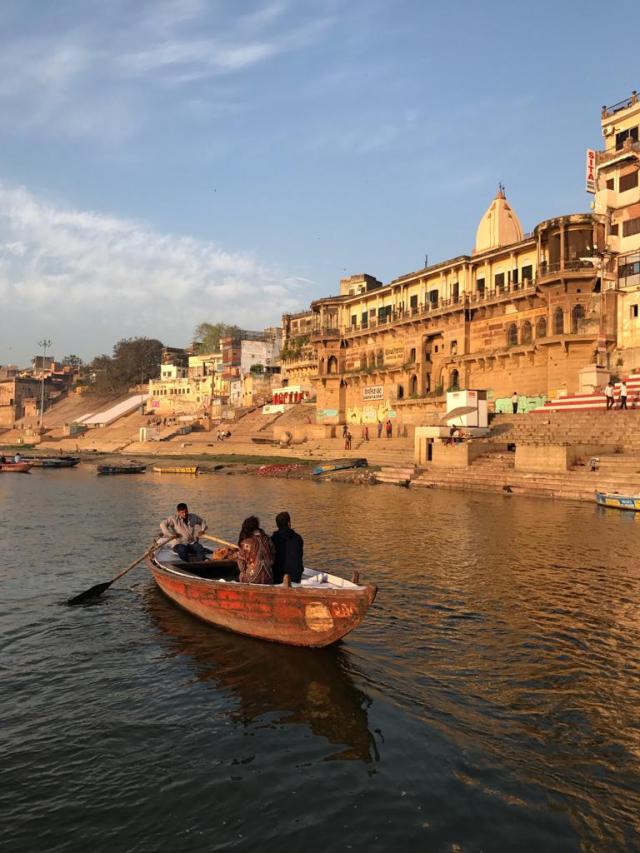
“Taj Mahal’s reflection”
We can safely say that the most evident contribution Islam has made to India is in art and architecture. Taj Mahal, commissioned by Mughal Emperor Shah Jahan for his wife Mumtaz Mahal, who died while giving birth, is the most prominent example of Indo-Islamic architecture. It is the most photographed place of the country. Shah Jahan wished to commission a twin palace across the river but his son Alamgir Shah did not give permission, showing his father’s depression and the construction costs as his excuses. Today, on the other bank of River Yamuna we do not see the twin of this love monument, but Taj Mahal’s reflection creates a splendid duality. In Indian legends, Agra city is called Agrapina, i.e., the heaven. With the aesthetics of Taj Mahal and magnificence of Agra Fort the city continues to attract visitors.
Meanwhile, laying 32 km away from Pakistan border, Amritsar is home to “The Golden Temple”, the most spiritually significant temple of Sikhism. Disciples of Guru Nanak, who refuse caste, find peace in the gold-plated temple in the middle of the pool of holy water. Although few in number, the Sikhs have an impact on the politics.
New Delhi, the capital, is the embodiment of all the colours of the country. Among the top sights are, the Lakshmi Narayan Temple, Indian Gate, Qutub Minar, the symbol of Turkish conquest, Lotus Temple, a Bahá’í House of worship, Red Fort and Jama Masjid.
The World Heritage List includes many landmarks from India: Jaipur, the capital of Rajasthan, is nown as the pink city. Hawa Mahal (Palace of Winds), Amber Fort and Jantar Mantar Observatory are the most visited landmarks.
Delhi, Agra and Jaipur form the golden triangle but the rock-carved cave temples I Ajanta and Ellora also attract numerous tourists. The erotism on the paintings and statues depict the passionate life Buddha chose to leave behind. In terms of style, the temples reflect the aesthetics of religious Indian architecture and sculpture.
“Bollywood: Poor but proud”
The most populated cities of the country are Bombay and Calcutta. As a port Bombay, is the centre of manufacturing and trade and also the home of the cinema industry. It is the home of the colourful, musical, melodramatic Indian films, shot in countless numbers. In 2009, Indian cinema received international recognition with “Slumdog Millionaire”, which won 8 Academy Awards. Like Awaara (the Vagabond) shot 47 years beforehand, Slumdog also deals with the problems of the social structure and apparently nothing much changed in India in the first quarter of the 21st century.
With 10 million inhabitants Calcutta is a lively and developed city. It is the hometown of Rabindranath Tagore, the first Nobel laureate author of the country. In addition to being intellectual and cultural capital, Calcutta is also a city where inhabitants struggle hard with poverty. Neighbouring Bangladeshis also benefit from the cultural richness of the city.
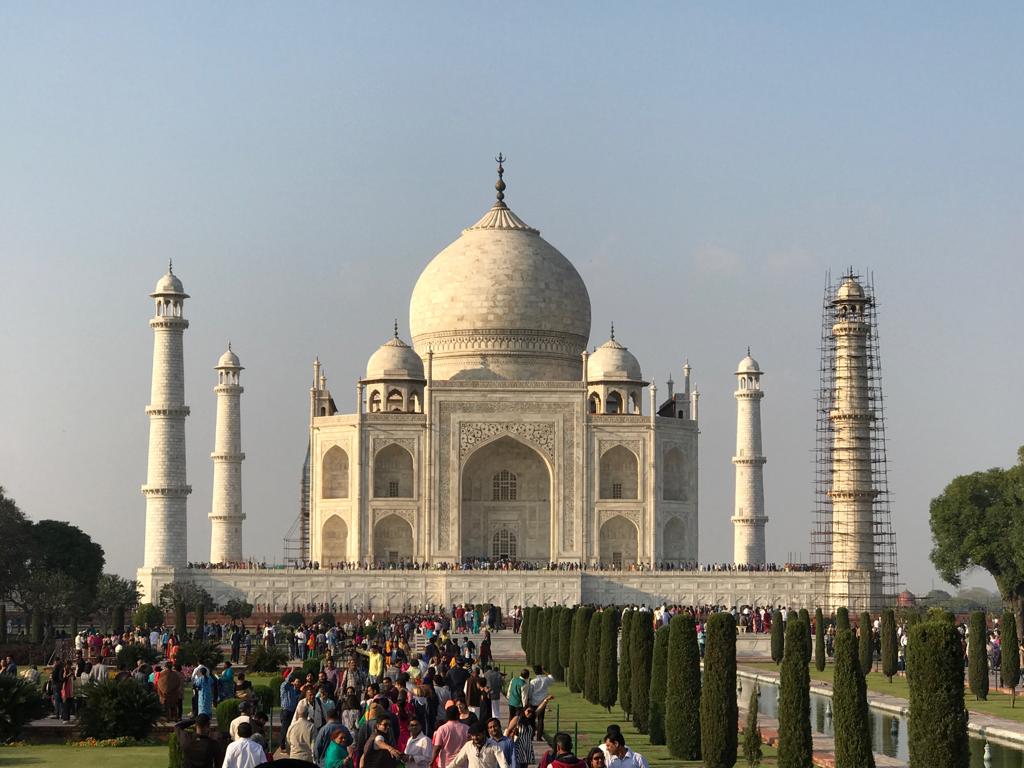
“Tell me your caste…”
Even though it has been abandoned officially, the biggest social issue of India is the caste system that divides the society into classes. There are four main castes and endogamy prevails. Even if the caste is no more an obstacle or the fixed marriages are not imposed in the urban lifestyle, the traditions are firmly followed in the countryside. The proposal is made by the girl, whose family also pays the “dowry”. The younger the bride, the lesser the dowry amount. This leads to marriages at very young ages. The rituals of a country marriage are: ceremony at the bride’s home, the groom riding a white horse, flowers, henna, rice grains thrown in fire, rose petals spread around…
Today, gender equality is no more and issue for the Indian society. However, poverty and high childbirth numbers stand as the two biggest problems of Indian women. On the other hand, women are represented at the Parliament at a significant rate.
“Spice island”
Spice, the country’s name in Sanskrit, has put its mark on the cuisine. Patna, also known as basmati rice, saffron and coconut are the star players. The cuisine is as rich as the culture. Enriching the European cuisines during colonial days, the country fascinated the newcomers not only with its rich gold reserves but also with the wide range of spices.
Today, with all its religious, cultural and historical wealth, India is a key player in the world. The harmony and balance in this glorious giant are defined by Tagore, who knows the country more than any of us:
“Perfect unity is formed by harmony, not similarity”.
 Blog
Blog 